
Trading Education
Structured content covering how forex markets work, how to read charts, what drives exchange rates, and how traders think about risk.
How Forex Markets Work
The foreign exchange market is a global, decentralised network through which currencies are bought and sold. Unlike stock markets, there is no single exchange building. Transactions happen electronically between banks, financial institutions, brokers, and individual traders across multiple time zones simultaneously.
The market operates in overlapping sessions: Sydney, Tokyo, London, and New York. The London session and the overlap between London and New York typically see the highest trading volume for major currency pairs. This affects liquidity, which in turn affects spreads and how easily large orders can be filled without moving the price significantly.
Currency pairs are always quoted as one currency against another. When you see EUR/USD at 1.0850, it means one euro buys 1.0850 US dollars. The first currency is the base currency; the second is the quote currency. Understanding this structure is the starting point for everything else in forex education.

Reading Trading Charts
Charts are the primary tool traders use to visualise price history and identify patterns. Understanding what you are looking at is essential before applying any analysis technique.
Candlestick Charts
Each candlestick represents price movement over a specific time period. The body shows the open and close price. The wicks (or shadows) show the high and low. A green or white candle means price closed higher than it opened. A red or black candle means price closed lower. Candlestick charts are the most widely used chart type in forex because they pack a large amount of information into each visual element.
Bar Charts
Bar charts show the same information as candlesticks but in a different format. Each bar has a vertical line showing the high-low range, a left tick showing the open, and a right tick showing the close. Some traders prefer bar charts for their cleaner appearance on longer timeframes. The information content is equivalent to candlestick charts.
Line Charts
Line charts connect closing prices over time with a single line. They show the general direction of price movement clearly but contain less detail than candlestick or bar charts. Line charts are useful for identifying broad trends and are often used for longer timeframe analysis or when comparing multiple instruments on the same chart.
Support and Resistance
Support is a price level where buying interest has historically been strong enough to stop or reverse a downward move. Resistance is the opposite. These levels are not precise lines but zones where price has reacted before. Identifying support and resistance is one of the foundational skills in chart analysis, used by traders who focus on both technical and fundamental approaches.
Timeframes
Charts can display price data across different timeframes: 1 minute, 5 minutes, 1 hour, 4 hours, daily, weekly. The timeframe you use affects what you see. A pattern on a 5-minute chart may look entirely different on a daily chart. Most traders use multiple timeframes to get context. A daily chart might show the overall trend while a 1-hour chart is used to look for specific entry points.
Trend Analysis
A trend is a sustained directional move in price. An uptrend is characterised by higher highs and higher lows. A downtrend shows lower highs and lower lows. A sideways market (or range) shows price moving between two roughly horizontal levels. Identifying whether a market is trending or ranging changes how most technical analysis tools are applied.
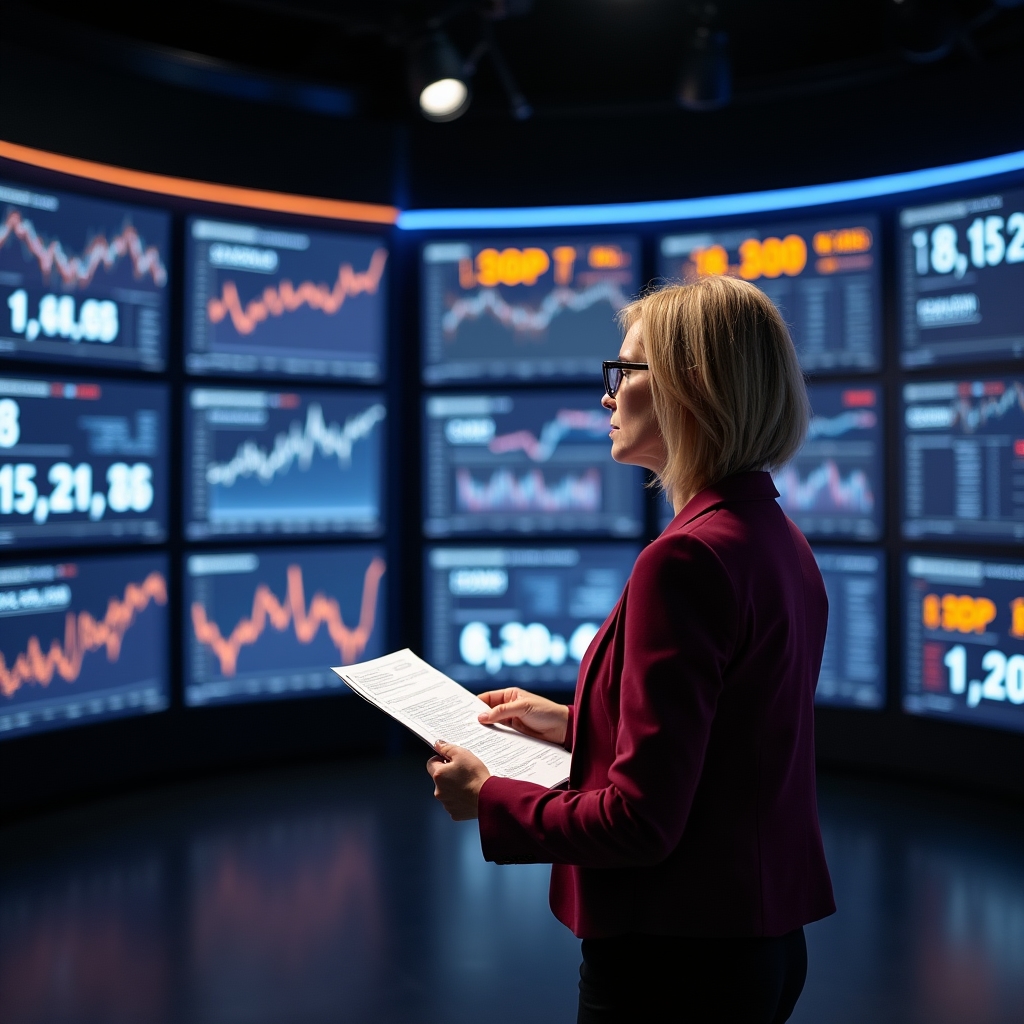
What Drives Exchange Rate Movements
Exchange rates reflect the relative value of two economies. Several categories of factors influence where rates move.
Interest Rate Differentials. When one country's central bank raises interest rates, its currency often strengthens because higher rates attract capital seeking better returns. The relationship between interest rates and currency values is one of the most studied in forex. Traders pay close attention to central bank meetings from the Federal Reserve, European Central Bank, Bank of England, and Bank of Japan.
Inflation Data. Higher inflation typically leads to currency weakness over time, though the relationship is complex. Central banks respond to inflation by adjusting interest rates, so inflation data affects currency markets partly through what it implies about future rate decisions.
Economic Growth Indicators. GDP data, employment figures, retail sales, and manufacturing output all give a picture of economic health. Stronger economies tend to support stronger currencies, though markets often price in expectations before data is released.
Political and Geopolitical Events. Elections, policy changes, trade disputes, and geopolitical tensions can all cause significant currency movements. These events introduce uncertainty, which markets typically price through volatility.
Risk Management in Forex Trading
Understanding risk is not optional in forex. It is foundational. Sterlavion covers the core principles that inform how traders approach loss limitation and position management.
Stop-Loss Orders
A stop-loss is an instruction to close a trade if price moves a specified distance against the position. It defines the maximum loss on a trade before it is entered. Placing a stop-loss is one of the most basic risk management actions a trader can take. Where to place it depends on the structure of the trade and the volatility of the pair being traded.
Position Sizing
Position size determines how much of a currency pair you buy or sell. A larger position amplifies both gains and losses. Position sizing is typically calculated in relation to account size and the distance to the stop-loss, so that no single trade risks more than a defined percentage of the account. This keeps individual losses manageable regardless of outcome.
Understanding Leverage
Leverage allows traders to control a position larger than their deposited capital. A 30:1 leverage ratio means a £1,000 deposit can control a £30,000 position. This magnifies both potential gains and potential losses. Leverage is one of the most significant risk factors in forex trading and is the primary reason why losses can exceed initial deposits if not managed carefully.
Risk-to-Reward Ratio
This ratio compares the potential loss on a trade (distance to stop-loss) with the potential gain (distance to take-profit target). A 1:2 ratio means the trader is risking one unit to potentially gain two. Thinking in risk-to-reward terms helps traders evaluate whether a trade setup is worth taking, independent of how often they expect to be right or wrong.